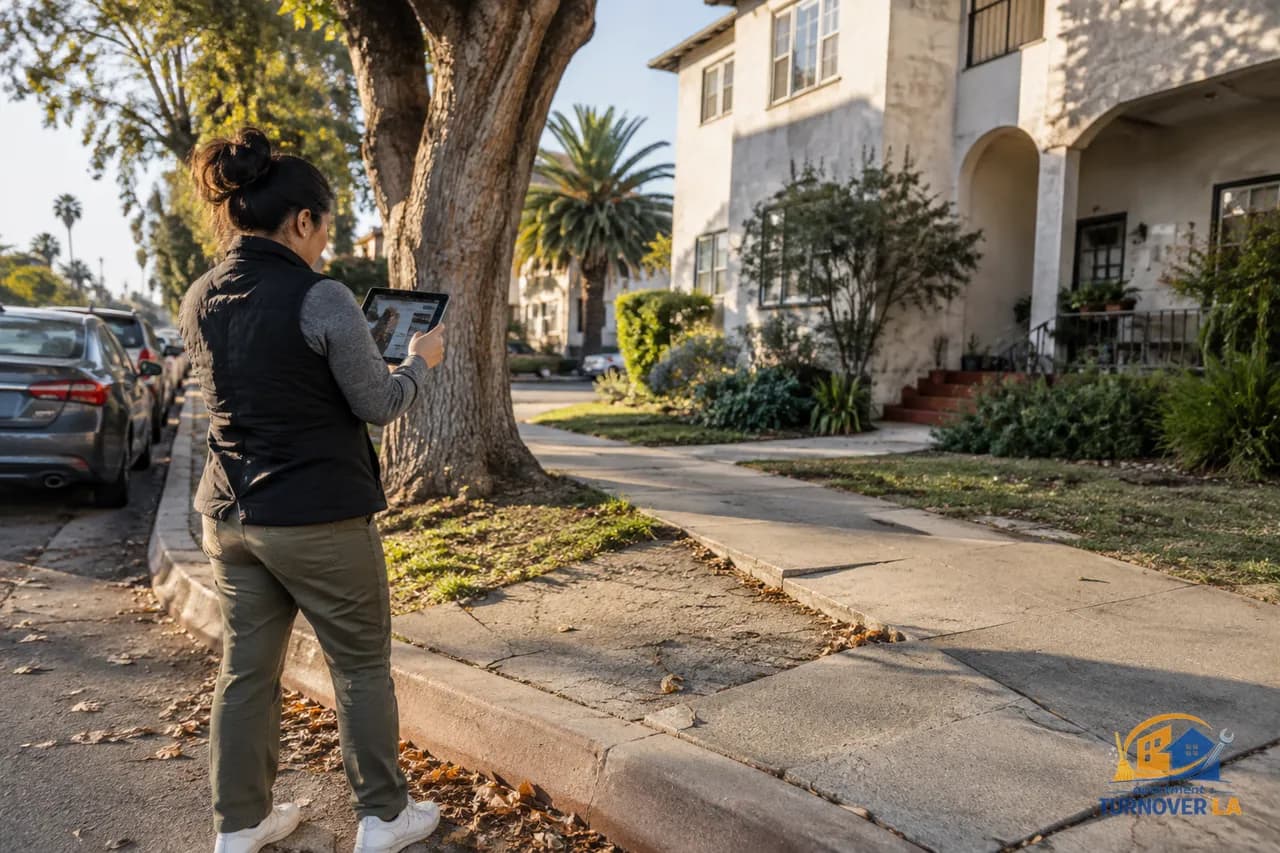
Quick answer: In the City of Los Angeles, the adjacent property owner is generally responsible for sidewalk repair, except when street tree root growth caused the damage. Elsewhere in Los Angeles County, responsibility depends on whether the property is in an incorporated city or unincorporated county area. Confirm the parcel's jurisdiction before authorizing work.
For a landlord, the key issue is not just who eventually pays. It is identifying whether the damaged concrete is in the public right of way, documenting the cause, and routing the request to the correct public agency before a private crew starts demolition. A raised panel outside a Koreatown fourplex can be a trip hazard, but it is not automatically a private maintenance item.
Get instant quote in 30 seconds
Does the property owner or Los Angeles County pay for sidewalk repair?
The answer starts with jurisdiction. Los Angeles County contains 88 incorporated cities, plus unincorporated communities. The County does not automatically maintain every sidewalk in the county, and the City of Los Angeles does not govern sidewalks in Santa Monica, Pasadena, Long Beach, or unincorporated areas.
Within the City of Los Angeles, the established general rule is that owners of property adjacent to a sidewalk are responsible for its repair. The important practical exception is damage caused by street tree roots. That distinction matters because a slab may be lifted by roots from a city maintained parkway tree, not by a condition on the rental parcel.
Before assigning blame or opening a work order, pull the property address on the relevant city or County public works site. Save a screenshot showing the jurisdiction and submit the condition through that agency's reporting process. A contractor invoice does not resolve a jurisdiction question after the fact.
What is the sidewalk rule inside the City of Los Angeles?
In the City of Los Angeles, an adjacent owner generally bears responsibility for repairing defective sidewalk, curb, and driveway areas next to the property. The City has separately recognized an exception for sidewalk damage caused by street tree root growth. That is why a manager should photograph both the defect and the parkway tree before approving any concrete work.
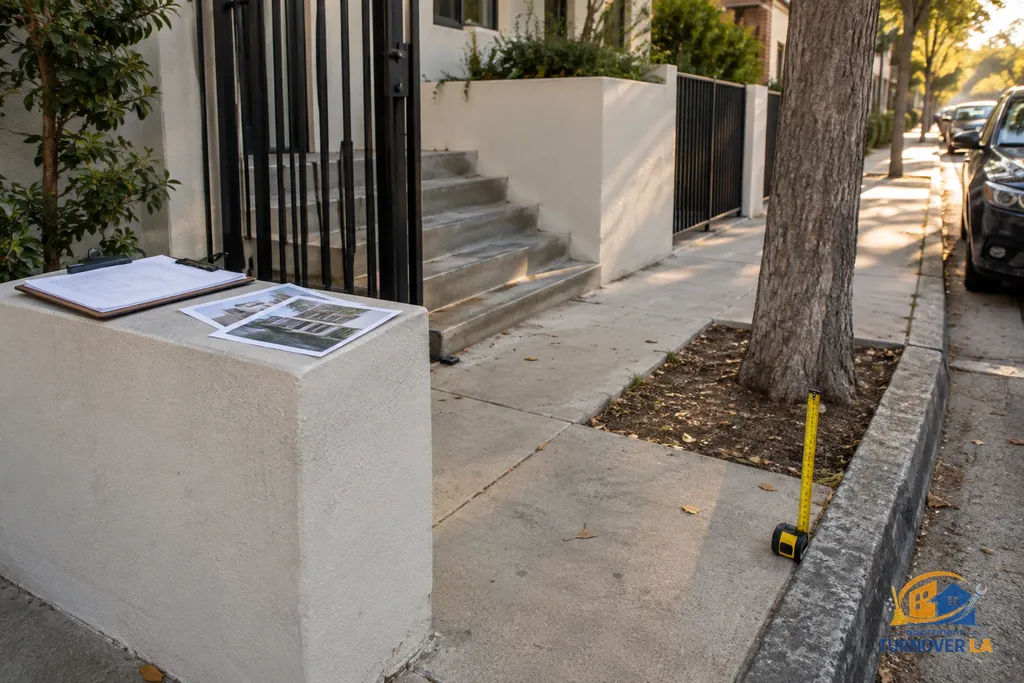
Do not assume every crack qualifies. A hairline crack, a settled panel, utility work, drainage erosion, and root lift can call for different reporting paths and different evidence. Photograph the full panel, the adjoining panels, the curb, the tree well, and any utility markings. Include a ruler or level if there is a vertical change.
The City may inspect, prioritize, or provide a program route for qualifying work, but a report is not permission to hire a private crew in the public right of way. Ask the responsible department whether a permit, encroachment approval, traffic control, or approved contractor is required.
Why does the County location change the answer?
A rental's mailing address can say Los Angeles even when its sidewalk is controlled by another city or by unincorporated Los Angeles County. That makes broad statements about “Los Angeles County responsibility” unreliable for a specific work order.
For example, a Santa Monica owner should follow Santa Monica's local process, while an owner in an unincorporated pocket near East Los Angeles should verify the County department responsible for the road frontage. A property in the City of Los Angeles follows City procedures, even if the owner manages units across the county.
Use the parcel address, not the neighborhood name, to identify the public agency. Keep the agency confirmation in the building file with the inspection photos. This is especially useful when ownership changes, when an insurer asks for records, or when a prospective tenant reports the same condition later.
Can a landlord charge a tenant for damaged sidewalk concrete?
Usually, an exterior public sidewalk repair should not be treated as a routine tenant turnover deduction. The sidewalk is outside the leased unit and often inside the public right of way. Normal aging, tree root movement, settlement, and ordinary weather exposure are building or public infrastructure issues, not tenant-caused damage.
If a tenant or guest actually caused identifiable damage, document the evidence carefully and get legal guidance before withholding funds. California deposit accounting has timing and itemization requirements. Review California Civil Code §1950.5 and this practical guide to the 21-day deposit return rule before making any deduction.
For rent stabilized units, do not confuse habitability and repair obligations with a deposit chargeback. The LAHD Rent Stabilization Ordinance is a useful starting point for City of LA landlords, but it does not turn ordinary public sidewalk deterioration into tenant damage.
Need a turnover quote?
Send the unit address and your target date. We quote in 15 minutes.
From $225 · 48-hour turnaround
Get an instant quoteWhat should a manager document before any sidewalk repair?
Document first, then determine the responsible party. This prevents a well meaning onsite person from treating a municipal issue like a simple handyman ticket. A complete file should include these six items:
- Wide photos showing the property frontage, street, curb, and sidewalk panel.
- Close photos of cracks, uplift, spalling, and any trip edge, with a ruler or level.
- Photos of street trees, tree wells, roots, utility covers, and recent utility markings.
- The exact address, parcel information, and the city or County jurisdiction confirmation.
- The date reported, report number, agency contact, and any inspection outcome.
- A temporary safety action, such as warning cones or access rerouting, if conditions warrant it.
Keep the file separate from the unit's move out records. Your apartment turnover checklist should still include a walk of paths, stairs, handrails, and entry lighting, but a sidewalk claim needs its own record trail.
Can a handyman repair a public sidewalk without a license or permit?
A handyman can handle many private property punch list tasks, but public sidewalk concrete is not a casual handyman job. Work in a public right of way may require agency authorization, permits, insurance requirements, traffic protection, and a contractor with the correct qualifications. The scope can change quickly once demolition, curb access, drainage, or tree roots are involved.
For private-site work, such as a loose gate latch, damaged step nosing inside the lot line, or a failing entry handrail, a handyman and general maintenance crew can address the condition after the scope is confirmed. For a public sidewalk, first get written direction from the local agency.
California licensing rules also depend on the total job scope, not merely the label a worker uses. The California DCA Landlord-Tenant Guide is helpful for general owner responsibilities, but it is not a permit approval. Treat agency requirements and contractor licensing as separate checks.
Get instant quote in 30 seconds
How does a sidewalk issue affect an apartment turnover?
A sidewalk defect can delay showing access even when the vacant unit itself is clean, painted, and ready. Leasing agents, applicants, vendors, and movers all use the frontage. If someone must step around a raised panel at the main gate, the property has an operational problem before it has a leasing problem.
During a vacancy walk, separate public frontage issues from unit turn items. A private entry threshold, a broken courtyard light, and a loose railing may belong on the same rental repair work order. A cracked sidewalk beyond the property line should be reported to the jurisdiction while private access hazards are addressed immediately.
This split avoids another common error: delaying a rentable unit while waiting for a municipal sidewalk timeline. Secure the private path, communicate any safe access route to vendors, and preserve documentation of the public report. For other cost allocation questions, see what landlords can charge for turnover.
What is the practical decision path for LA landlords?
Use this simple matrix to route the issue before any repair is scheduled.
| Condition | First responsible contact | Manager action |
|---|---|---|
| Raised panel beside a City street tree | City of Los Angeles reporting channel | Photograph roots and tree well, submit report, request direction |
| Broken sidewalk in another incorporated city | That city's public works department | Verify local sidewalk policy and permit requirements |
| Damage in unincorporated County area | Los Angeles County public works channel | Confirm right of way and County process |
| Loose step or walkway inside the lot line | Property owner or manager | Create a private repair work order |
| Tenant alleges injury | Insurer and legal counsel, as appropriate | Preserve photos, reports, and communication records |
The useful distinction is not whether the concrete looks close to the building. It is whether the damaged area is public right of way, what caused the condition, and which agency controls it. That three-part check is more reliable than sending a handyman based on a tenant photo alone.
What should you do after you identify the responsible party?
Once the jurisdiction and cause are clear, document the next action in writing. If the public agency accepts the report, retain the case number and inspection notes. If it directs the adjacent owner to proceed, ask what approvals and specifications apply before seeking a contractor. If the condition is private, issue a clearly scoped repair order and inspect the completed work.
For a vacant building, keep the public sidewalk issue visible on the property-level maintenance log even after the apartment turns. Unit photos may prove the interior was ready, but they do not show that a reported frontage hazard was tracked. A clean division between public infrastructure, owner maintenance, and tenant-caused damage is what protects the file.