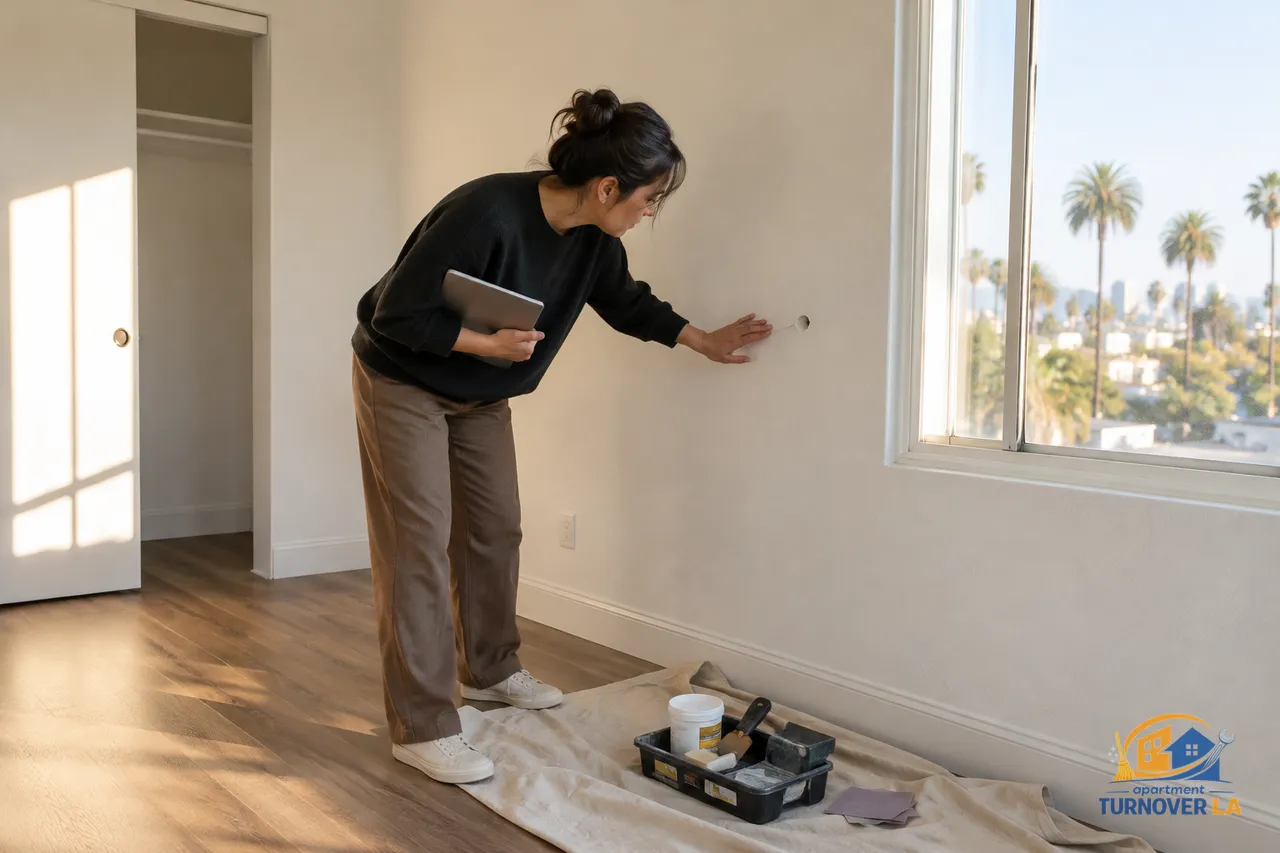
Quick answer: Repair is usually better when drywall damage is small, dry, and limited to one area with solid material around it. TurnOver LA lists a Small drywall patch + texture at $150 per patch. Replacement makes more sense when water damage, mold, sagging, or multiple failed patches show that the board or the area behind it is no longer sound.
For an isolated hole, dent, or removed anchor, patching preserves the wall and limits disruption. For a soft, stained, bowed, or repeatedly damaged section, replacement is the cleaner decision because a cosmetic patch does not correct the condition underneath. Get instant quote in 30 seconds
What drywall damage can usually be repaired?
Small, contained surface damage can usually be repaired when the surrounding drywall is firm, dry, and attached securely to the framing. Common examples include a doorknob hole, picture-hanger holes, scraped paper facing, a small impact dent, or a cutout left after removing a wall device. The practical test is not just the size of the mark. Press lightly around the damage and look for softness, crumbling edges, staining, or movement. If the board stays solid, a patch and texture match are normally the appropriate scope.
A repair also works best when there is no active cause behind the damage. For example, a tenant moving furniture may leave one clean impact hole. That calls for a localized repair. A hole near a leaking supply line, however, needs inspection of the leak and wall cavity before anyone closes the wall. A standalone drywall repair is suited to a defined patch, while a broader turnover punch list may fit a general repair crew.
When is it better to replace drywall?
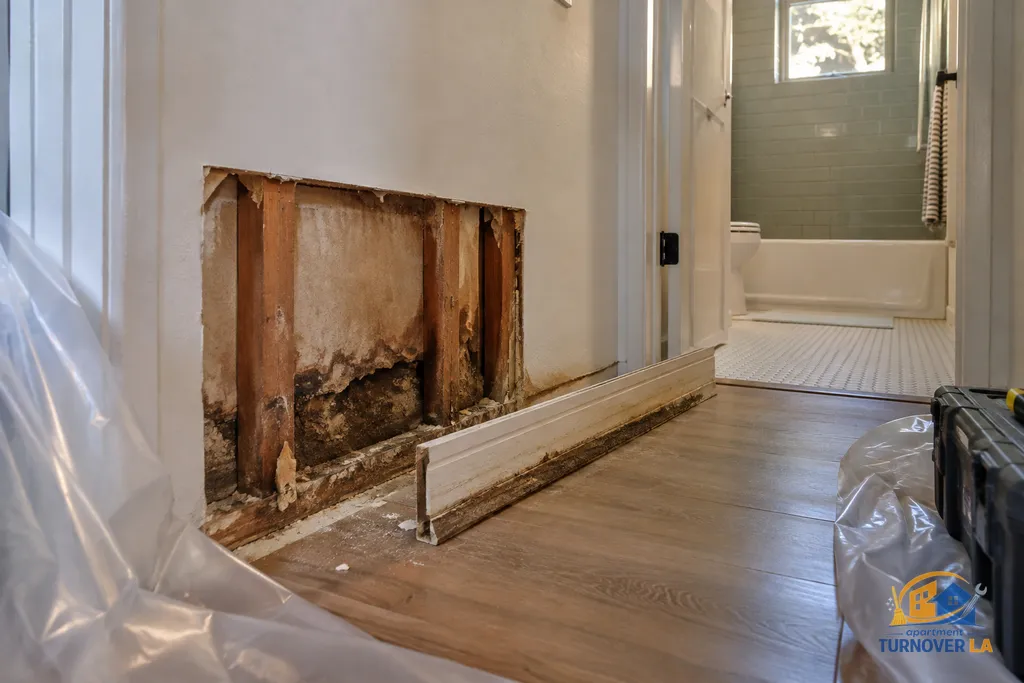
Replace drywall when the damage extends beyond a stable, isolated patch area or when the board has lost its integrity. Water-soaked gypsum, persistent staining, sagging ceilings, crumbling edges, visible mold, and damage spread across a large portion of a wall are replacement signals. So are several nearby patches that leave the wall uneven or difficult to finish cleanly. Installing new board gives the repairer a sound edge to fasten, tape, finish, and texture.
Replacement is not automatically required just because a hole looks large. A professional can cut back to stable material and replace only the affected section. The decision should follow the source and extent of damage, not a rule that every large opening needs a full wall replacement. If plumbing, roofing, or a window leak caused the problem, correct that issue first. Closing a wet or unstable wall can leave the same problem hidden behind fresh paint.
For a closer look at patch scope in rental units, see Drywall Patching in Los Angeles Rental Apartments. It covers the practical difference between ordinary wall damage and a repair that needs more investigation.
How do water, moisture, and mold affect the decision?
Water changes the repair decision because drywall is not meant to remain wet. A one-time splash that dries promptly may leave only a finish issue, but a soft spot, swollen seam, peeling paper, or brown stain can indicate that moisture reached the gypsum board. In that situation, painting or skim coating the surface may hide evidence without confirming the wall is dry and sound. The source of moisture must be identified before deciding whether a limited cutout or a larger replacement is needed.
Visible mold also calls for more care than a routine patch. The immediate question is whether moisture is ongoing and how far the affected material extends. Avoid treating a discolored, damp area as a normal cosmetic turnover item. Inspect the adjacent wall, baseboard, and any plumbing or exterior opening that could be involved. Once the moisture issue is addressed, remove compromised material as needed and rebuild the opening with a finish that matches the room.
For landlords, documenting the condition before work begins helps separate a tenant-caused impact from maintenance related water damage. It also helps keep the scope clear when deciding what belongs in a move-out repair list.
What does a drywall repair cost in Los Angeles?
Cost depends on whether the work is a clean patch or a larger repair involving damaged board, texture, paint blending, and access. The TurnOver LA rate menu lists a Small drywall patch + texture at $150 per patch and a Medium drywall repair at $240 per patch. Those are distinct repair scopes, so an inspection should establish which one fits the wall rather than treating every hole as the same job.
The quote covers labor and the crew's own supplies. If the repair needs paint or parts, those materials are priced at the on-site inspection and added to the final invoice only with your approval first. A wall that needs replacement after a leak may require a different scope than a dry impact hole, which is why a photo alone may not settle the final repair plan.
For more cost detail on repair categories and what can change the scope, see What Is the Average Cost of Drywall Repair?. Get instant quote in 30 seconds
Need a turnover quote?
Send the unit address and your target date. We quote in 15 minutes.
From $225 · 48-hour turnaround
Get an instant quoteHow long does drywall repair usually take?
A small drywall repair often takes one to three days when drying, sanding, texture matching, and paint touch-up are included. The hands-on patching may be brief, but joint compound and finish work need adequate drying time between steps. A small section replacement can take two to four days because it adds cutting out damaged board, installing new board, taping, finishing, and blending the surface.
Scheduling also depends on access and the condition behind the wall. A dry, vacant unit with a single hole is straightforward. A repair that reveals wet framing, a plumbing issue, or loose material needs the underlying issue addressed before the wall is closed. Pushing through that step can create a callback after the next tenant moves in.
TurnOver LA has a flat 48-hour turnaround on every job, with no rush or same-day upcharge. That timing is useful for a vacancy, but it does not remove the need to let finishes dry or to resolve active moisture when the wall condition requires it.
How should a landlord decide during an apartment turnover?
A turnover decision should start with condition, cause, and the next leasing deadline. Repair only what is actually localized, then choose replacement where the wall is compromised. This keeps a small tenant-caused impact from becoming an unnecessary full-wall project, while avoiding the opposite mistake of covering a recurring maintenance problem with paint.
Use this sequence during the final walk-through:
- Photograph the damage before cleaning, patching, or painting.
- Check whether the drywall is dry and firm around the affected area.
- Look for the cause, including a leak, loose doorstop, repeated impact point, or failed anchor.
- Confirm whether the patch boundary can reach sound drywall.
- Decide whether texture and paint can blend into the existing wall.
- Keep any repair tied to a tenant charge separate from ordinary maintenance records.
California security deposit deductions have specific rules, including requirements around itemization and timing under California Civil Code §1950.5. For the distinction between a deductible repair and normal aging, review Normal Wear and Tear in California. A clean record of condition and scope is more useful than an assumption based on the size of one wall mark.
Can a drywall patch match the rest of the wall?
Yes, a patch can blend well when the surrounding wall is sound and the finish is matched carefully. The visible challenge is usually not filling the opening. It is feathering the joint compound wide enough, matching the existing texture, priming the repair, and blending paint so the repaired area does not flash under side light. Flat walls and light textures are generally easier to blend than heavy orange peel, knockdown, or older textured finishes.
A patch becomes harder to hide when the wall has faded paint, multiple prior repairs, or a texture that has been painted over repeatedly. In those cases, the repair itself may be structurally appropriate, but the finishing plan may include a wider paint touch-up or repainting the room for a consistent result. That is a finish decision, not necessarily a reason to replace otherwise solid drywall.
DIY work can be reasonable for a very small cosmetic mark, but a poor patch often becomes more visible after paint. Before taking that route in a rental, see Can I Do Drywall Repair Myself in an LA Rental Apartment?.
Choose repair for sound drywall, replacement for compromised drywall
The best choice is usually simple: patch a defined area of dry, stable drywall and replace material that is wet, sagging, mold affected, crumbling, or damaged beyond a reliable patch boundary. Do not use replacement as a default for every hole, and do not use a surface patch to conceal a problem inside the wall.
For a vacancy, speed matters because an empty unit at $2,400 monthly rent loses about $80 per day, calculated as $2,400 divided by 30. The practical goal is to approve the right scope early, complete the repair cleanly, and avoid a second visit caused by an overlooked leak or weak wall section. Get instant quote in 30 seconds